Home
RheoPower >>
News >>
About Us >>
SiteMap

LATEST NEWS

1st December 2025
Recycling is popular today, but 50 years ago it was our core business — and it taught us the behaviour of polymers.

10th November 2025
ICPC, Shanghai, China Tommi Borg: “Structure and Viscoelastic Properties of Polyethylene by Control Theory”

10th March 2025
New book by Tommi Borg, Control Theory in Rheology, Springer International Publishing. Read more >>

16th April 2022
Tommi Borg visits for your meetings at AERC 2022, in Seville, Spain, 26th-28th April 2022.

14th November 2019
Updated RheoPower 5.1 package is now available. Read more >>

24th September 2018
64-bit RheoPower 5.0 analyses still more accurate thanks to developments. Easy to deploy databases. Read more >>

16th April 2017
Tommi Borg visits for your meetings at Chinaplas May 16-19, 2017 - Guangzhou, PR China.

24th November 2015
New published paper "Linear viscoelastic model for different flows based on control theory", Appl. Rheol. Read more >>

Recycling. Innovation. Development.

During the 1980s our pipe manufacturing company developed one of the most extensive and profitable polymer recycling operations in Northern Europe, processing several kilotons of post-consumer and post industrial polyolefin waste annually.

These efforts not only provided a cost-efficient raw-material stream, but also laid the conceptual foundation for the later development of Control Theory in Rheology.

Market Need and Strategic Approach

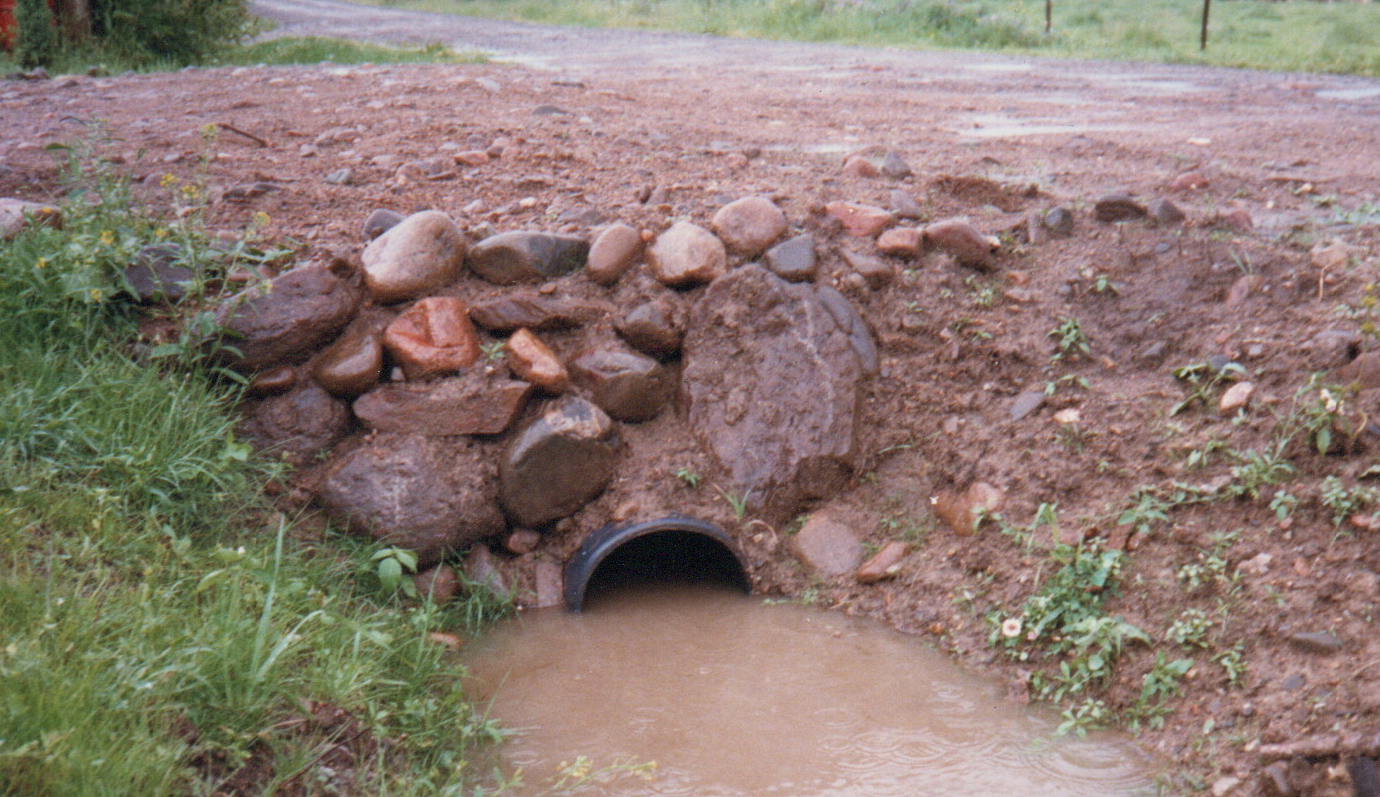
Newly installed 315 mm recycled HDPE culvert pipe placed beneath a rural road.
(rumpu)
In Finland during the 1970s–1980s, there was a rapidly growing demand for road culverts and drainage pipes with diameters of 200–500 mm. Concrete culvert segments frequently separated in winter due to frost heave, and corrosive landfill soils quickly attacked metal culverts. A polymer-based solution became essential.

Field experience showed that HDPE performed best in frost-susceptible soils, offering superior toughness, chemical resistance and long-term durability. However, using expensive pressure‑pipe–grade HDPE for simple culverts was economically unjustified.

Our strategy was therefore straightforward:

  • utilize cost-efficient recycled polyolefin feedstock,
  • engineer pipe structures to meet required stiffness and impact resistance,
  • and tailor blends to perform reliably at temperatures as low as −40°C, including ice formation inside the pipe.

  • Because installation and handling at low temperatures require flexibility, MDPE-type materials (medium-density PE) provided the optimal balance of toughness, stiffness and processability.
    Used LDPE fertilizer sacks collected as feedstock for recycling.
    (LDPEbags)

    Collection and Pre-Processing of Raw Materials

    A central innovation was our avoidance of re‑pelletizing. Conventional melt re‑compounding adds unnecessary energy cost and causes thermal/oxidative degradation.

    Instead, all feedstock was introduced directly into a 100m³ blending silo, where it was:

  • continuously homogenized,
  • dried using modified agricultural grain dryers,
  • pre-conditioned to 50–70°C to increase extruder throughput,
  • stabilized by removing residual moisture and volatile contaminants.

  • Additional drying significantly reduced devolatilization, particularly of PVC traces or dirt-derived gases, which would otherwise form bubbles during extrusion. The variability of the feedstock made MWD (molecular weight distribution) and density critical factors. With a melt‑flow indexer we monitored stability of the blend, supported by literature found MWD data for different fractions. Through years of practical optimization, we learned to produce highly uniform blends despite heterogeneous inputs.
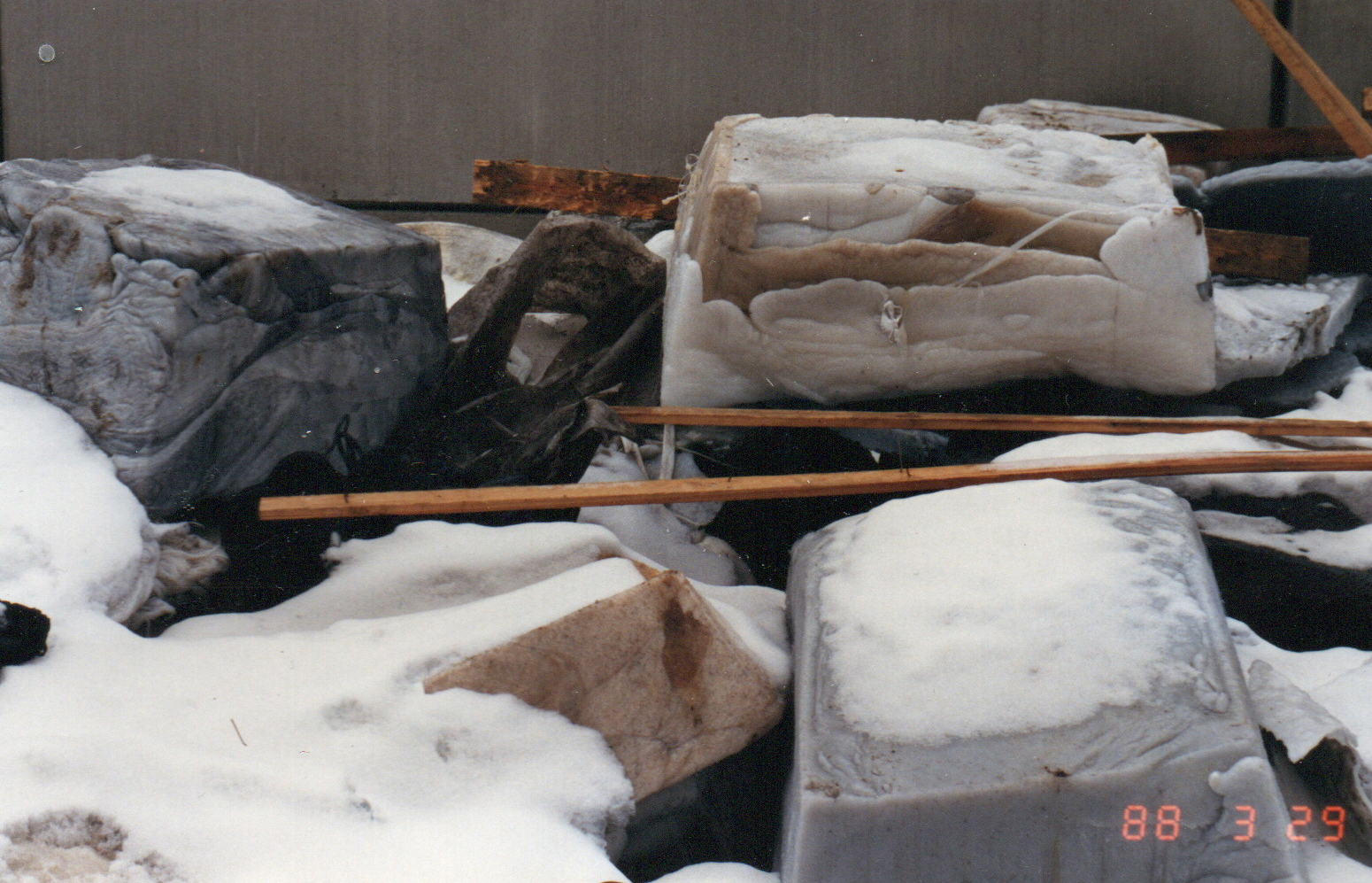
    Polyethylene blocks of approx. 300 kg, collected under the pelletizing extruder and incorporated into the raw-material stream.
    (blocks)


    For homo-PP, which has low impact strength, we used linseed-oil-based fatty-acid plasticizers, supplied via a controlled drip system into the extruder hopper — similar to a medical infusion line. Several extruders were equipped with:

  • vacuum-vented degassing zones,
  • custom screw geometries optimized for reclaimed materials,
  • Pulse Mixers for final melt homogenization.

  • We also manufactured and rebuilt our own screws and barrels to maintain precision under demanding recycling conditions.

    More about extrusion is discuissed here.

    Manufacturing Pipes from Prime Virgin Resin and Heat-Shrinkable Sleeves

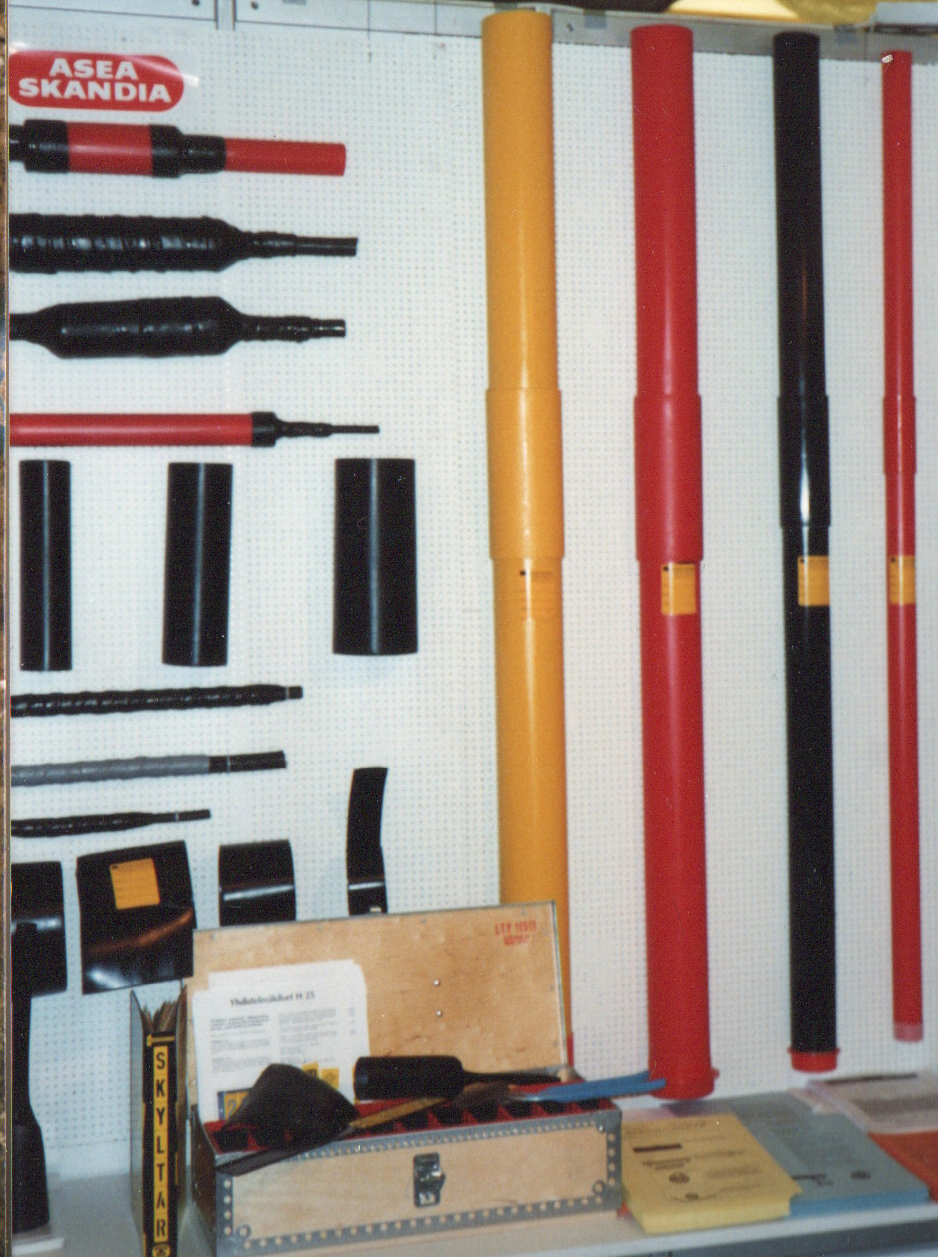
    Installation of telecommunication and power-duct pipes. Heat-shrinkable sleeves are applied for jointing and sealing cable conduits.
    (kutiste)
    At a separate facility we also produced pressure pipes from prime virgin resin. Red‑colored pipes were supplied for telecommunication ducting and yellow ones for electrical cable installations. With modern extrusion lines and virgin raw materials, this was a straightforward task.

    In 1987 we developed and patented a globally unique process for manufacturing heat‑shrinkable sleeves, based on:

  • strong molecular orientation,
  • controlled chain disentanglement,

  • These same principles later became fundamental in the development of Control Theory in Rheology, linking polymer processing conditions to dynamic melt behavior and structural relaxation mechanisms.


    Home | SiteMap | Contact us @ TomCoat 1996-2025 / All rights reserved